 LABORATORY BALL MILLS
How should I choose roller-mill linings and stations?
Match the whole loaded vessel
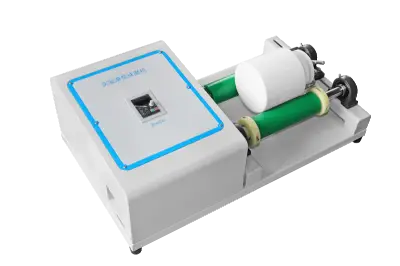
Two rollers support and rotate the jar or drum. Check vessel diameter, length and the combined mass of vessel, media and sample. Nominal volume alone does not establish the allowable load or the required drive.
Choose the sample-contact surface
Ceramic, polyurethane and other suitable linings separate the material from the structural metal body. Select the exact grade around abrasion, solvent compatibility, temperature and cleaning. Each lining can shed wear products, so reduced metal contact must not be interpreted as zero contamination.
Use parallel stations deliberately
Two-, four- and eight-station jar mills provide separate vessel positions for formulation or process comparisons. A shared drive does not imply an independently adjustable speed for every position. Confirm jar clearance, loading and the available controller.
Specify custom functions separately
Cooling jackets, heating, vacuum connections, enclosed collection and hazardous-area electrical systems are configuration-specific. Define the liquid, duty cycle, temperature measurement and discharge method before treating an application proposal as a purchasable specification.
Compare the equipment
- Laboratory Roller Ball Mill
- Ceramic-Lined Drum Ball Mill
- Lined Drum Ball Mill
- Two-Station Jar Mill
- Four-Station Jar Mill
- Eight-Station Jar Mill
Explore related application requirements · Browse the full selection guides
Related Products
Get In Touch
Our professional team will reply to you within one business day. Please feel free to contact us!
Share your material or application, quantity, destination and target purchase date. If a parameter is unknown, say so—we can help clarify it. Leave an email address or phone number so we can reply.