 LABORATORY BALL MILLS
What changes when selecting a stirred-mill lift and cooling system?
Choose the access arrangement
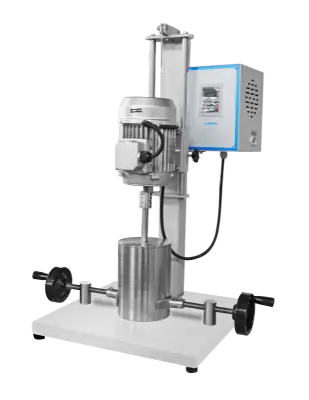
The laboratory stirred mill uses manual lifting for vessel access. Electric lifting reduces manual adjustment on the configured model. Confirm the lift stroke, stirring assembly clearance and the path used to remove the vessel. Vessel tipping is a separate handling function.
Review every contact component
The vessel, lining, stirring rod, media, seals and discharge parts all contact the process. Choose compatible materials together instead of specifying the vessel alone. Stainless steel, zirconia, corundum and polyurethane have different wear and chemical limits.
Define the cooling package
An optional jacket transfers heat through the vessel wall. Establish coolant conditions, connections and the intended temperature measurement point. A jacket does not by itself define the sample temperature or provide a complete cooling unit.
Validate scale-up and circulation
Moving from a laboratory batch to a pilot or production vessel changes media movement, heat load, handling and residence time. Define slurry properties before selecting a circulation pump. Confirm the complete drive, vessel, cooling and transfer configuration, then validate the process with representative material.
Compare the equipment
Explore related application requirements · Browse the full selection guides
Related Products
Get In Touch
Our professional team will reply to you within one business day. Please feel free to contact us!
Share your material or application, quantity, destination and target purchase date. If a parameter is unknown, say so—we can help clarify it. Leave an email address or phone number so we can reply.