 LABORATORY BALL MILLS
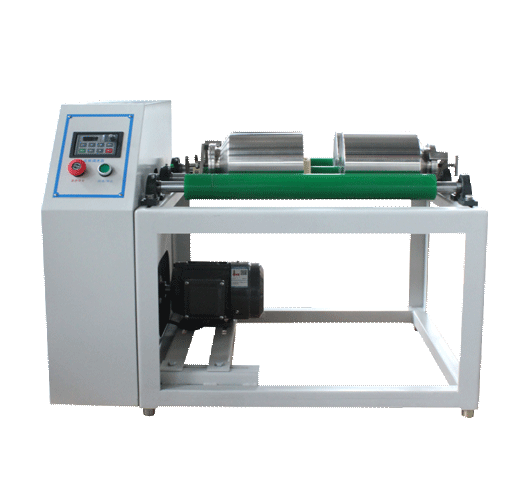
Four-Station Jar Mill
Get help choosing the configuration, supplied accessories and delivery basis. Not sure of the model? Start with your material and batch size.


Build a complete laboratory setup
Review the mill, sample-contact materials and trial conditions together.
Define the sample
Start with material properties, batch quantity and the measurement that will define a successful result.
Match the configuration
Check jar fit, media charge, electrical supply and any temperature or atmosphere requirements.
Plan the trial
Use a documented trial to compare particle size, sample recovery, temperature and wear.
Roller & Jar Mills
Four-Station Jar Mill
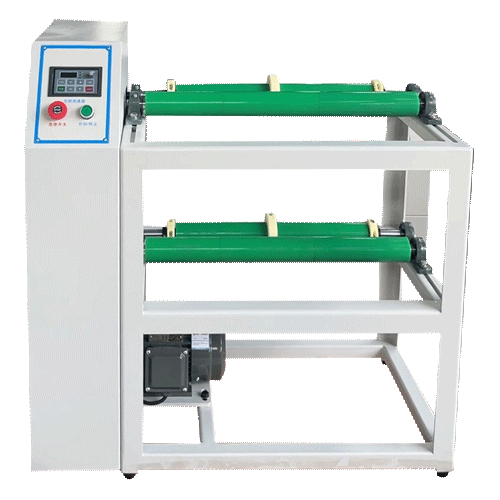
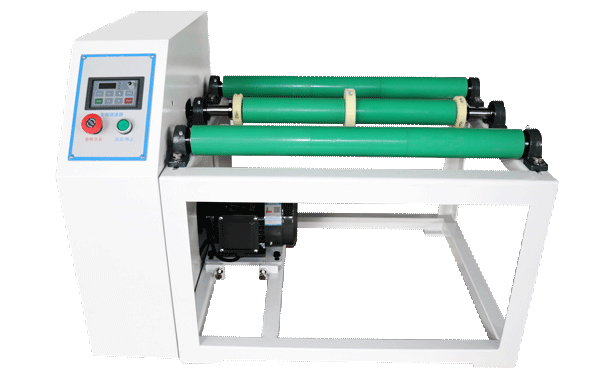
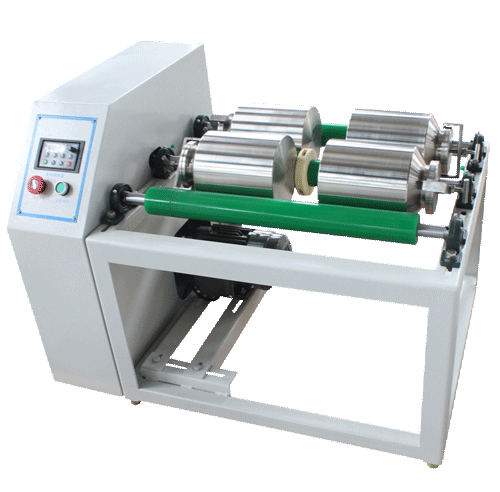
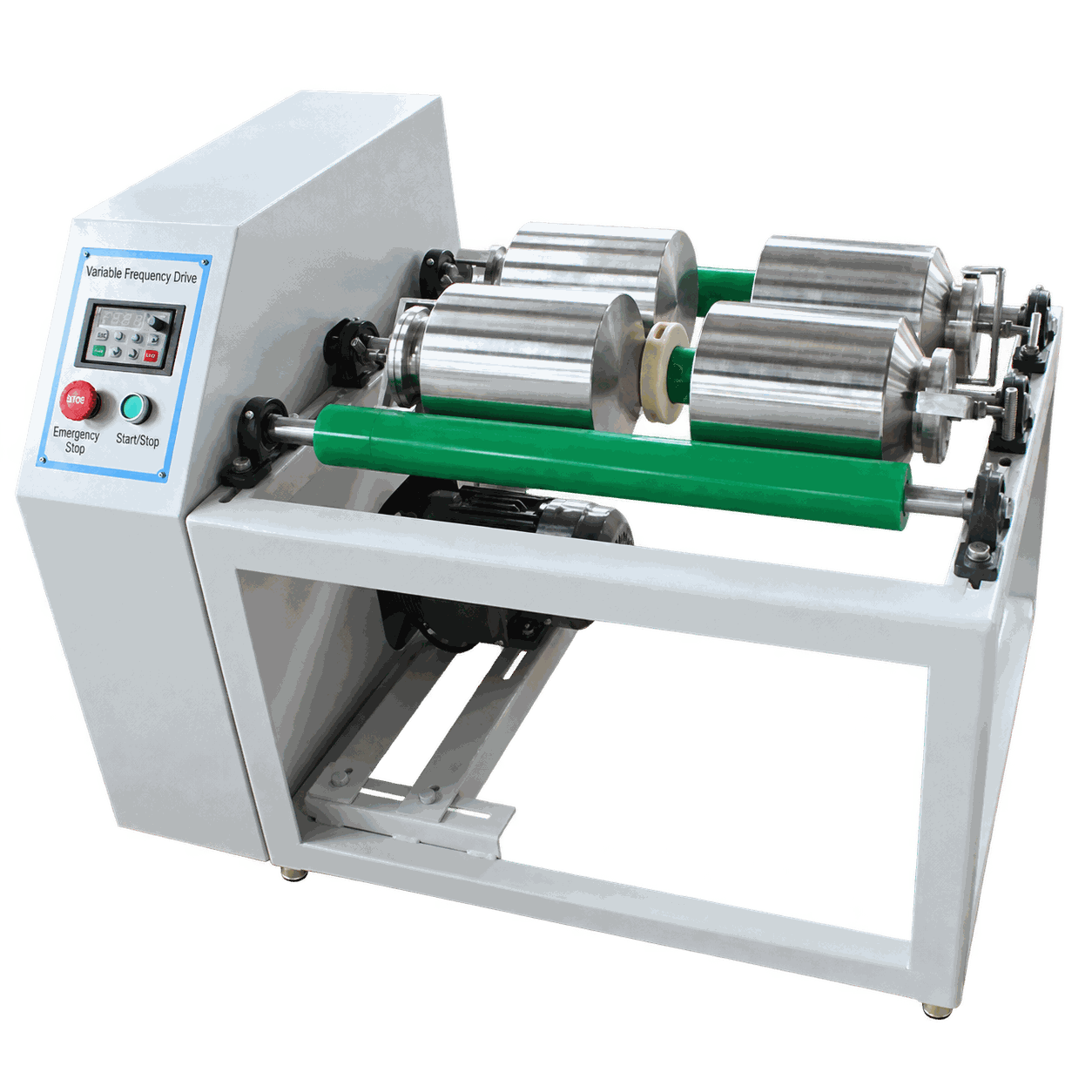
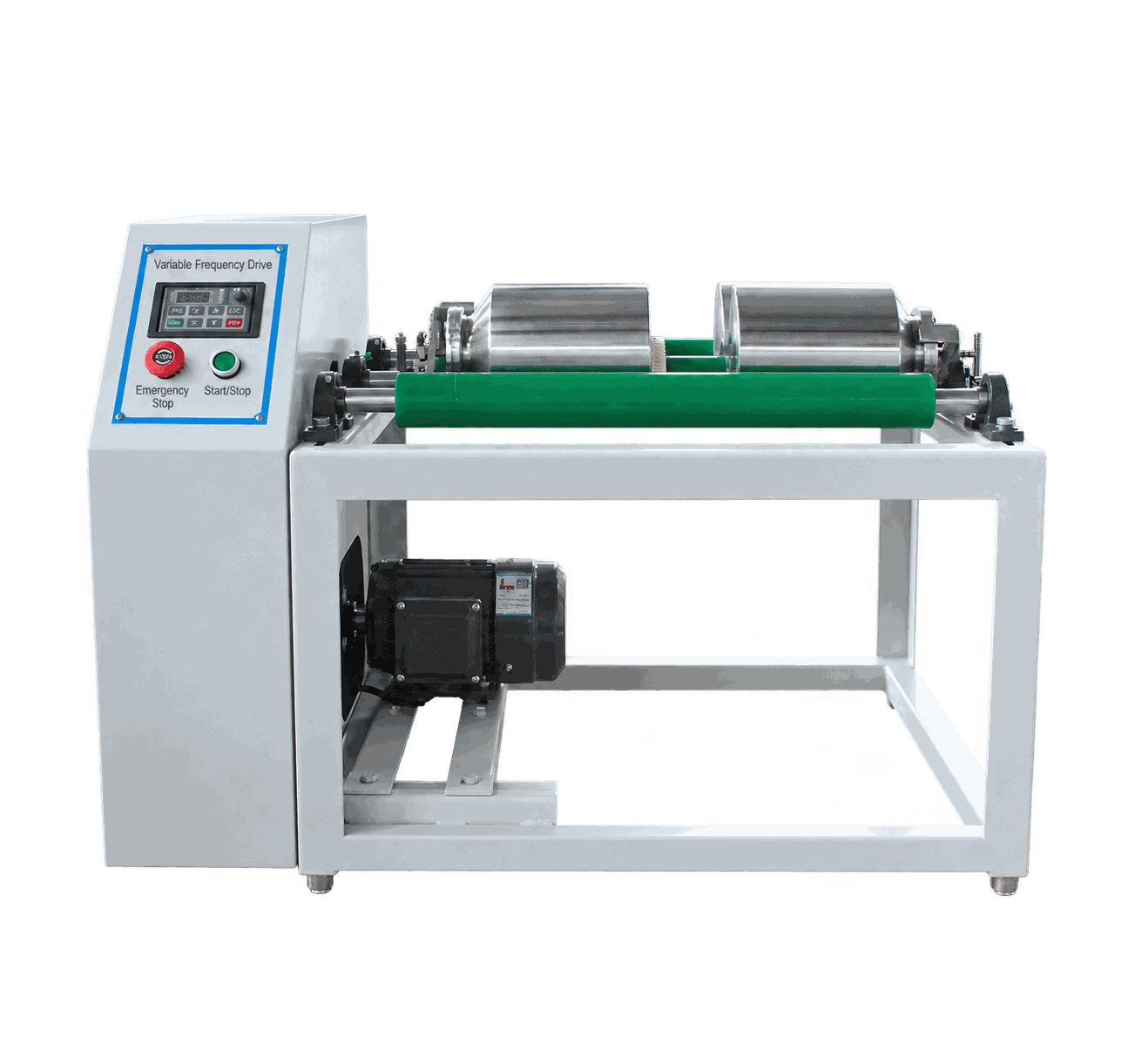
The GQM-4 offers four jar positions for batch formulation and grinding studies. Each closed jar contains its own sample and media charge.
Fit for your experiment
Useful when several samples must be compared under a common operating schedule. Match vessel dimensions and media loading before treating the positions as equivalent experimental conditions.
How to use this specification
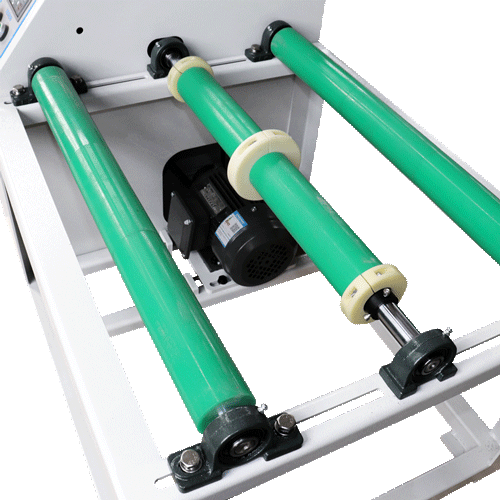
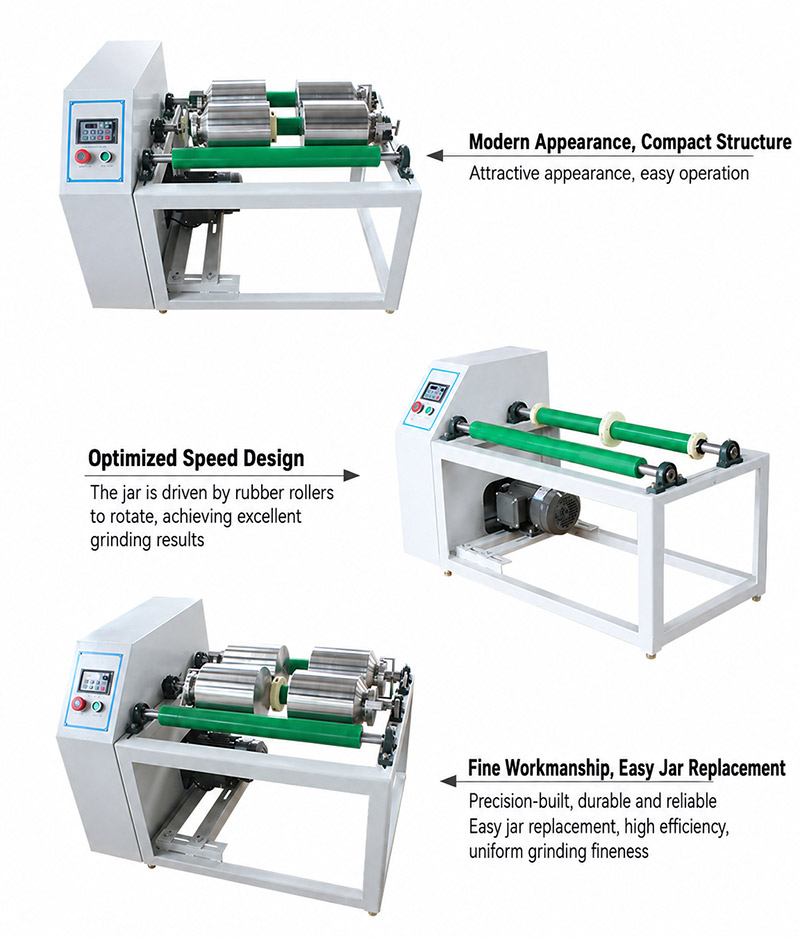
Driven rollers rotate the closed jars. As each jar turns, the media tumble through the charge to mix and grind the sample. Roller speed and jar diameter together determine jar motion.
Before selecting a configuration
- Match the instrument to the sample preparation or test method.
- Check the working load, available space and electrical supply.
- Agree the vessel, media and sample recovery procedure before ordering.
Key features
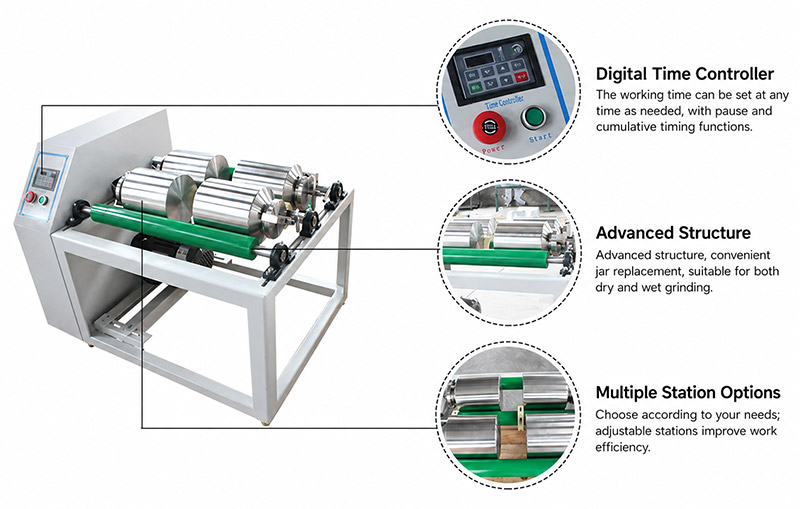
- Four jar positions support parallel formulation or process comparisons.
- Multiple samples can be prepared in one scheduled run.
- Separate jars keep formulations in individual vessels.
- The four-station layout increases available laboratory batch positions.
Construction details
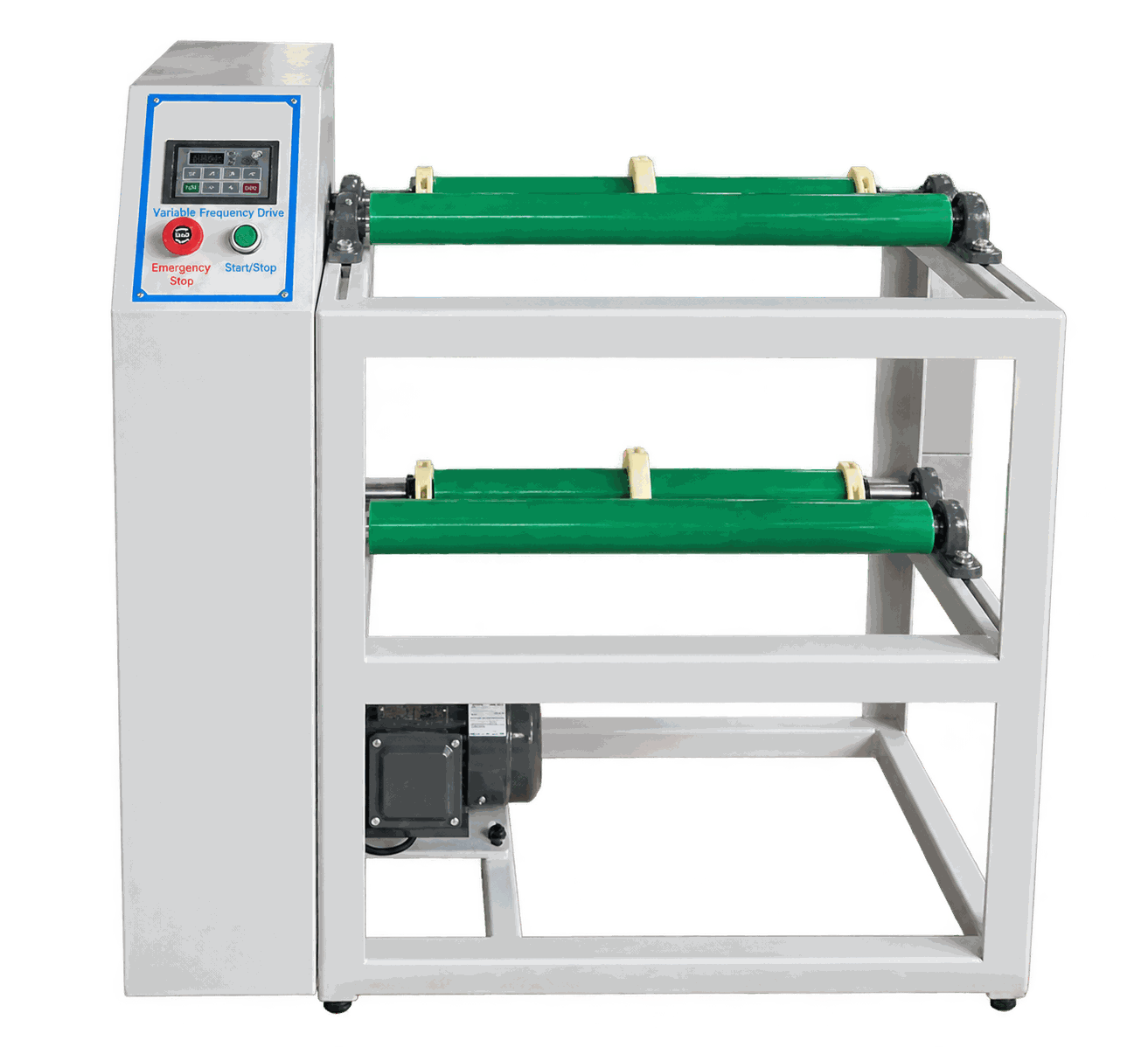
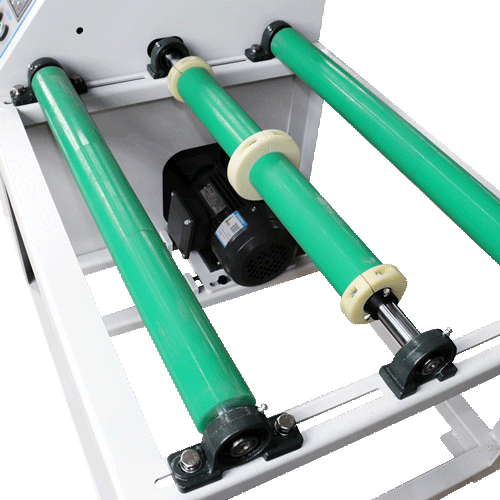
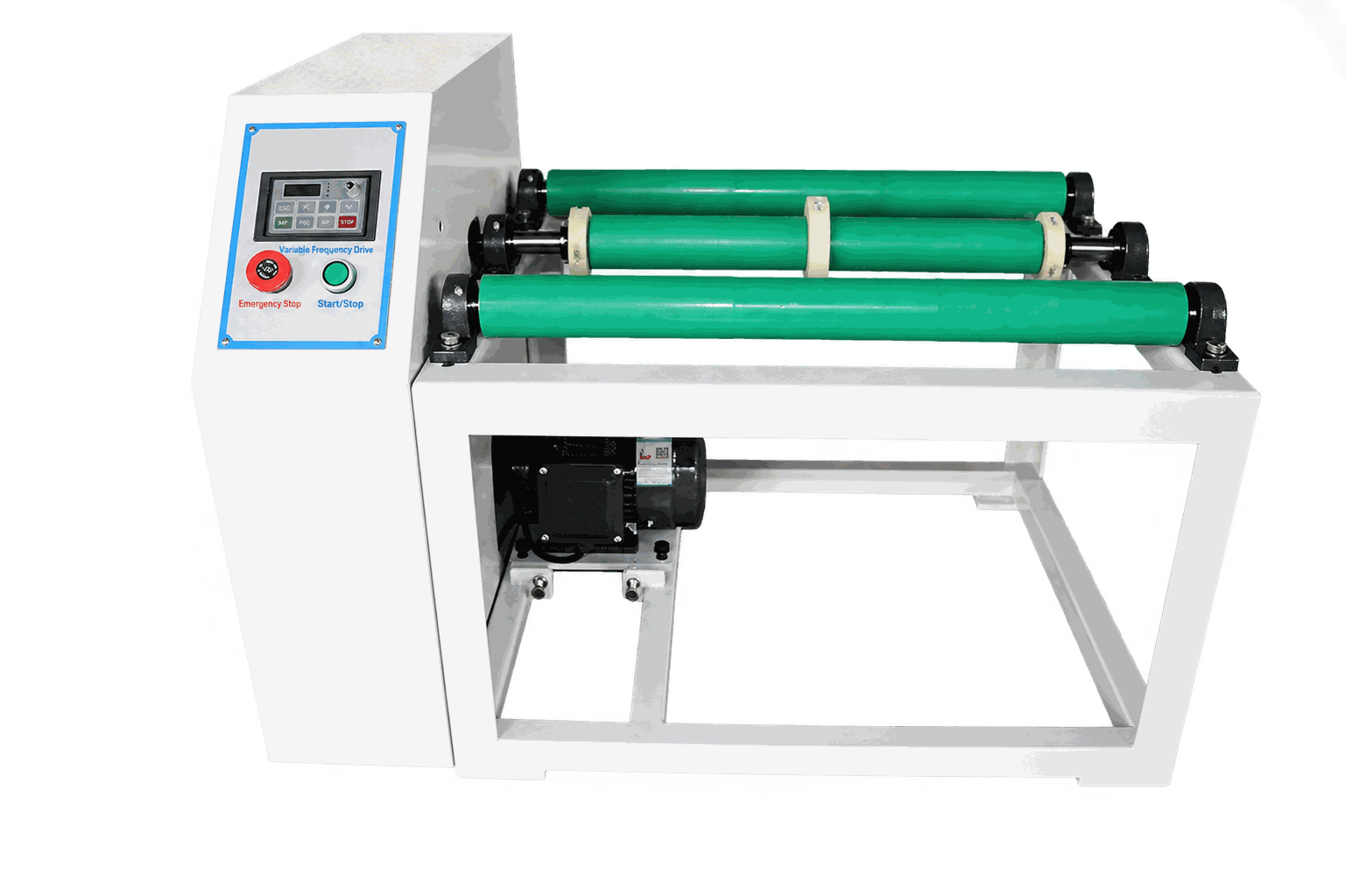
- Multiple roller groups carry the four vessels.
- Defined jar positions organize loading and unloading.
- A common transmission drives the roller system.
- The frame is arranged around the selected station count and jar size.
Configuration notes
Confirm the available space and loaded mass at each station. A custom heavy-jar arrangement requires a separate load review; the number of positions alone does not determine usable capacity.
Technical specifications
Compare the exact model and configuration. Nominal vessel volume is not the usable sample load. Particle-size results depend on the material and process; confirm critical values in the quotation.
| category | model | Overall dimensions (mm) | weight | Motor power | Power specifications | Main roller speed (rpm) | Grinding jar outer diameter range (mm) | Work station adjustment distance (mm) | Polyurethane roller outer diameter (mm) | Single working condition Maximum load |
| 4 workstations | GQM-4-5 | 950X660X690 | 70KG | 0.75KW | 220V, 50/60HZ single phase | 50~410±10 | Φ70-Φ230 | 235-280 | Φ60 | 22.5KG |
| GQM-4-5 (double layer) | 950X480X870 | 92KG | 0.75KW | 220V, 50/60HZ single phase | 50~410±10 | Φ70-Φ230 | 235-280 | Φ60 | 22.5KG | |
| GQM-4-15 | 1130X800X690 | 95KG | 1.5KW | 220V, 50/60HZ single phase | 40~365±10 | Φ75-Φ300 | 295-370 | Φ60 | 60kg | |
| GQM-4-20 | 1350X820X690 | 122KG | 2.2KW | 380V, 50/60HZ Three phases | 40~340±10 | Φ80-Φ300 | 420-480 | Φ60 | 80KG | |
| Experimental single work station | QM-5 | 730X415X260 | 32KG | 0.37KW | 220V, 50/60HZ single phase | 60~570±10 | Φ70-Φ230 | 200-250 | Φ60 | 22.5KG |
| QM-15 | 845X435X270 | 43KG | 0.75KW | 220V, 50/60HZ single phase | 60~570±10 | Φ75-Φ300 | 295-330 | Φ60 | 60kg | |
| 2 work stations | GQM-2-5 | 950X480X685 | 59KG | 0.75KW | 220V, 50/60HZ single phase | 50~410±10 | Φ70-Φ230 | 235-280 | Φ60 | 22.5KG |
| GQM-2-15 | 1130X550X690 | 80KG | 1.1KW | 220V, 50/60HZ single phase | 40~365±10 | Φ75-Φ300 | 295-370 | Φ60 | 60kg | |
| GQM-2-20 | 1350X650X690 | 92KG | 1.5KW | 220V, 50/60HZ single phase | 40~340±10 | Φ80-Φ300 | 420-480 | Φ60 | 80KG | |
| 8 work stations | GQM-8-5 | 950X660X960 | 106KG | 1.5KW | 220V, 50/60HZ single phase | 50~410±10 | Φ70-Φ230 | 235-280 | Φ60 | 22.5KG |
| GQM-8-15 | 1130X800X960 | 152KG | 2.2KW | 380V, 50/60HZ Three phases | 40~365±10 | Φ75-Φ300 | 295-370 | Φ60 | 60kg |
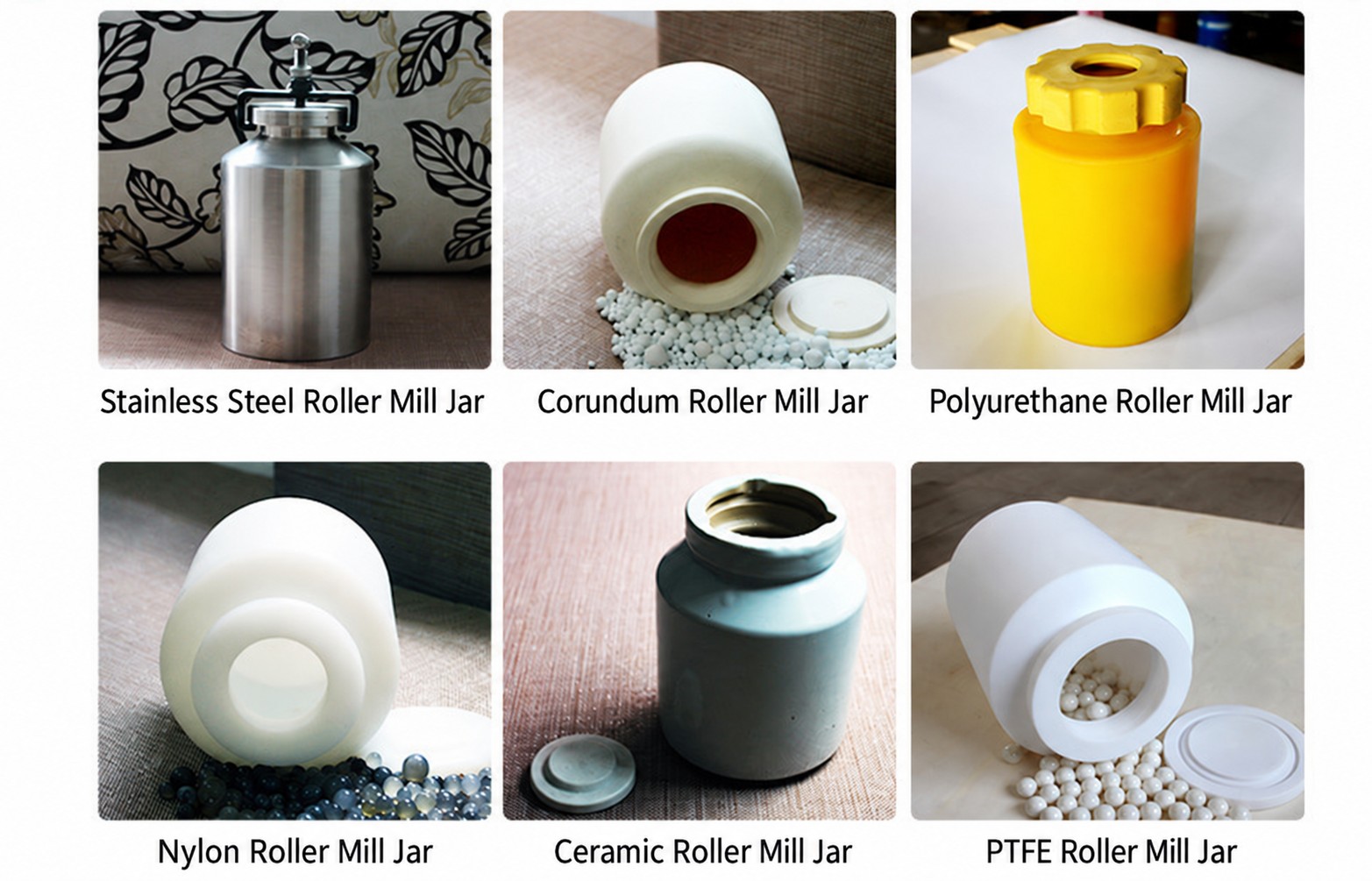
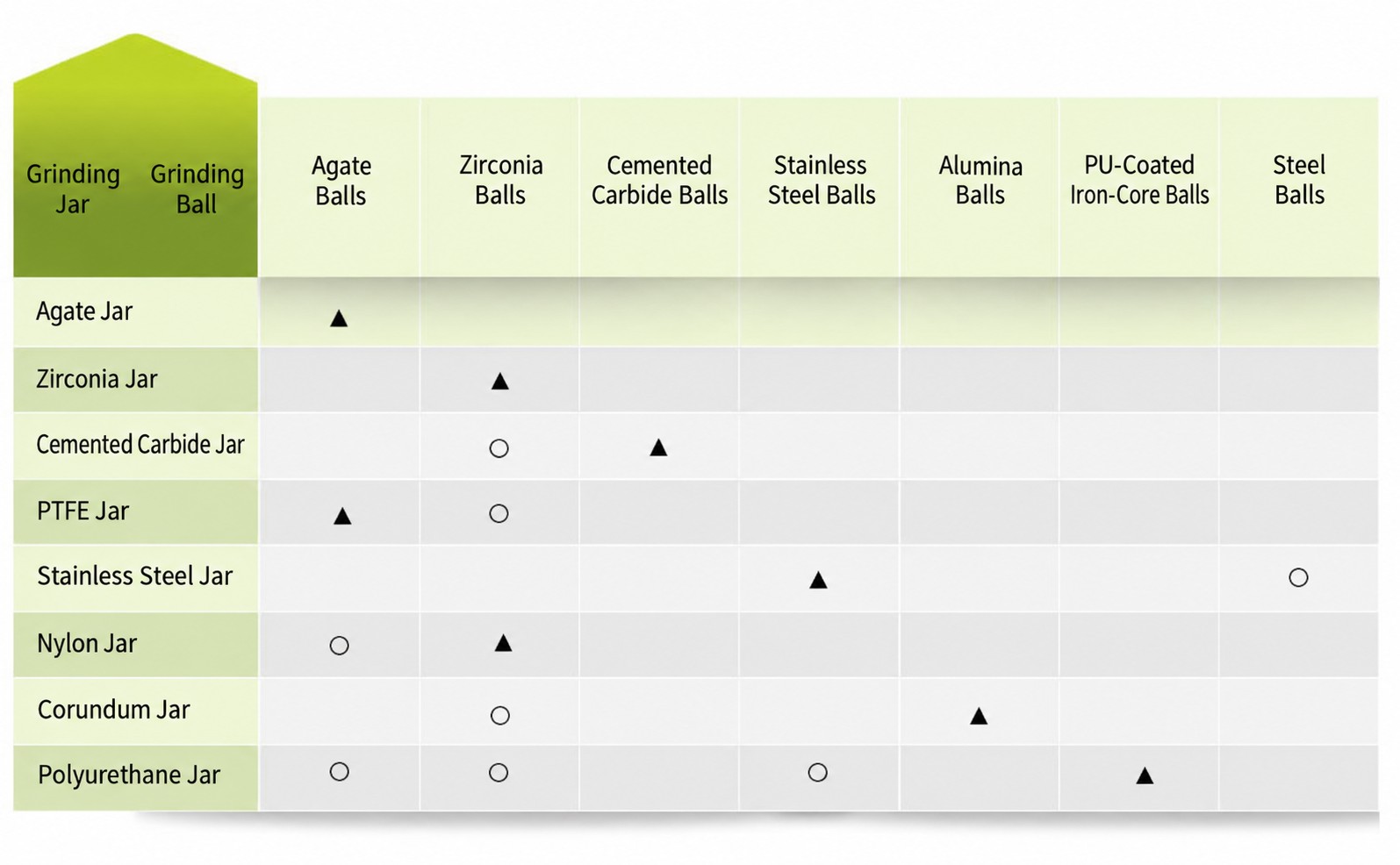
Product reference images
Plan a laboratory trial
Share the material, starting particle size, target result and batch quantity. Include the sample-contact materials and any temperature or atmosphere constraints.
Discuss this configuration → · Compare laboratory milling methods →
The trusted choice of industry leaders

Plan delivery around your configuration
Send the required quantity, destination and target arrival date with your inquiry. Compare the expected dispatch date separately from freight transit and import clearance.
| Order route | What needs to be confirmed | Scheduling starts when |
|---|---|---|
| Available stock | Exact model, jar/media set, electrical version and allocation of the unit. | The available configuration and order/payment requirements are confirmed; request the dispatch date for that unit. |
| Standard production | Model, quantity, supplied accessories and the current production slot. | The order specification and agreed payment requirements are complete and the production slot is confirmed. |
| Light customization | Changes such as contact materials, controls or electrical configuration, subject to technical review. | The changes are approved and any required components and production slot are confirmed. |
| Project customization | Technical scope, drawings where required, review milestones and acceptance requirements. | The technical scope is approved and agreed commercial and procurement prerequisites are met. |
Lead times are quoted for the confirmed configuration and current schedule. A catalog listing does not indicate live stock. Ask the quotation to state the lead-time range, its start condition and the agreed shipping basis.
Agree what arrives with the order
Confirm the machine or accessory quantity, jars and media, voltage/frequency, manuals, packing arrangement and required shipping documents in the quotation. Discuss inspection records or photographs needed before dispatch and the checks to make when receiving the shipment.
Delivery and handover details · See the manufacturing workshop
Know how support will work
Warranty and components
Our published service terms describe a one-year warranty and specified replacement conditions within the first month. Read the full warranty terms. Confirm coverage for the machine, motor/control components, jars, balls, liners and seals in the order; parts subject to wear need a separate coverage check.
Remote, spare-parts and on-site support
Contact TENCAN with the model, serial number and issue details for troubleshooting and parts identification. Provide your country and site location when asking about installation, training or on-site repair. Availability, travel, labor, freight and import costs must be agreed for the destination and service scope.
Check support responsibilities · Discuss your location and support needs
Review the evidence for your purchase
See the equipment being made
View workshop and assembly photographs, then discuss a visit or remote technical review for your project.
Evaluate your sample
Discuss sample grinding with the material, target result and permitted contact materials. Agree feasibility, sample quantity, test conditions and any charges before sending material.
Check documents and applications
Review available certificates for your exact model and destination, and application requirements relevant to your process.
FAQ
View moreGet In Touch
Our professional team will reply to you within one business day. Please feel free to contact us!
Share your material or application, quantity, destination and target purchase date. If a parameter is unknown, say so—we can help clarify it. Leave an email address or phone number so we can reply.